
Simply Success Newsroom

Share this article

The federal college sports bill that was supposed to bring order to NIL is now on life support. Democrats are projected to win control of both the House and the Senate after Tuesday's midterm elections, and the Protect College Sports Act, which passed the Senate 77 to 22 in September, now faces a House where its strongest supporters are about to lose the gavel.

Yesterday we wrote that the midterms would decide the fate of this bill. The voters have spoken, and for anyone building a business plan around federal NIL rules arriving this winter, it is time to rethink the calendar.

A Democratic Sweep Changes the Math

Front Office Sports reported early Wednesday that major news organizations projected Democrats would take both chambers, with Senate wins in North Carolina, Texas, Ohio, Kansas and Iowa. The new Congress is sworn in on January 3.

That leaves one realistic window for the bill: the lame duck session, when the outgoing Republican House majority returns to Washington. According to On3's breakdown of the congressional calendar, members have eight scheduled working days between November 9 and November 20, then return November 30 with 12 days before a scheduled December 17 adjournment. If the House does not act before the new Congress begins, the bill must be reintroduced and the process starts over.

The reaction from Capitol Hill was blunt. Front Office Sports reported that the bill's chances of House passage are now close to nonexistent. One Democratic aide told the outlet there is "zero reason to give Donald Trump a win on college sports." For The Win went further, calling the bill "effectively dead."

What the Bill Would Have Done

The Protect College Sports Act, written by Senators Ted Cruz of Texas and Maria Cantwell of Washington, would have put much of today's college sports economy into federal law. As CBS Sports detailed after the Senate vote, it would codify the House v. NCAA settlement framework, allowing schools to pay athletes up to $50 million a year through a revenue sharing cap, a retention fund tied to graduation and academic benchmarks, and dedicated money for women's and Olympic sports.

It also reached well beyond the paycheck. The bill would give the industry a limited antitrust exemption to enforce transfer and eligibility rules, allow one transfer without sitting out, lock in a five year eligibility window, require agents to register in a national database with fees capped at 5 percent, and bar football coaches from leaving for another job in the middle of a season. On the question of whether athletes are employees, the bill stayed neutral.

Why It Was Already Struggling

The election did not create the bill's problems; it removed the last path around them. Before Tuesday, House Majority Leader Steve Scalise and other Republicans had raised concerns about the bill's contents, and a GOP aide told Front Office Sports those concerns were never resolved. On the Democratic side, labor organizations and civil rights groups pushed back, and the Congressional Black Caucus remained firmly opposed.

Hakeem Jeffries, the House Democratic leader who is expected to become Speaker, has raised concerns in line with the caucus. President Trump has repeatedly urged Congress to pass the bill, but with his party losing ground and some defeated members unlikely to show up for every lame duck vote, Republicans may not have the attendance to pass it on party lines.

Supporters are not giving up publicly. NCAA president Charlie Baker suggested a lame duck deal was still possible, while cautioning, as On3 reported, that "even stuff that moves fast takes a long time."

What It Means for Athletes, Schools and Brands

For athletes, the immediate effect is continuity, not chaos. The House settlement, revenue sharing and the College Sports Commission's NIL Go clearinghouse remain in place. What disappears is the federal backstop that would have shielded those rules from court challenges and settled the conflict between national standards and state NIL laws.

That conflict is already in court. In June, Yahoo Sports reported that two football players filed a class action in federal court in California arguing that the commission's policies suppress NIL pay and clash with state laws in 17 states. Without a federal law, cases like that one carry more weight, and the rules governing collective deals and school arranged partnerships stay open to challenge.

For brands, that means the deal environment stays fluid. Companies working with college athletes should keep building contracts that can survive a rule change: clear deliverables, real marketing value, and terms that hold up under clearinghouse review. Athletes and families should expect state law, conference policy and the courts, not Congress, to shape the rules through at least the next recruiting cycle.

For programs, including Florida's, the planning horizon just got longer. Athletic departments that hoped for federal clarity on the revenue sharing cap and transfer limits before signing day will be budgeting under the current settlement rules instead.

What to Watch Next

Watch the House floor schedule when members return November 9. Any surprise movement would have to happen fast, and any House amendment would send the bill back to the Senate. Watch conference commissioners, who have been aligning their own rules with the bill and may now try to accomplish through policy what Congress could not. And watch whether the incoming Democratic majority offers its own version next year, which For The Win expects would look substantially different from the Senate text.

The takeaway is simple: federal NIL reform is not coming this year, and perhaps not in its current form at all. The smartest athletes, schools and brands will stop waiting on Washington and build for the system that exists today.

Stay ahead of the game. Our newsroom tracks every turn in the business of college sports. Join the Simply Success Sports newsletter for the latest analysis.

Sources

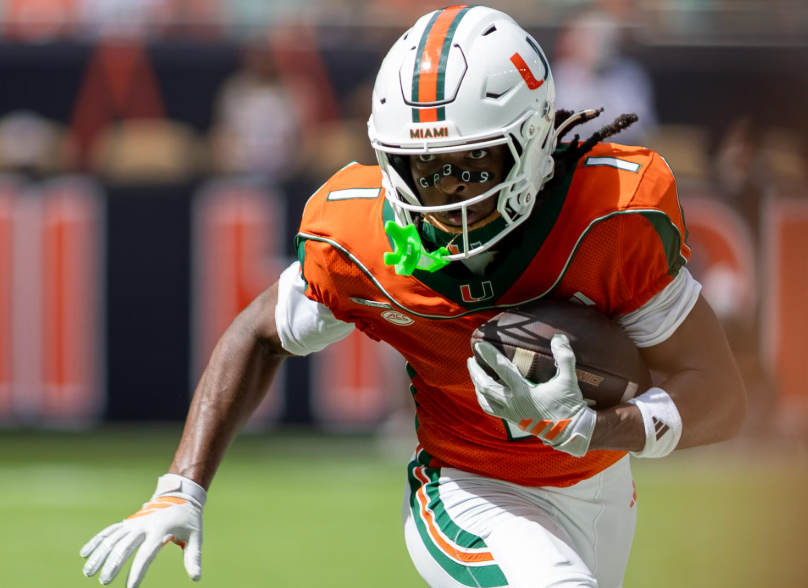
Miami Hurricanes football player in orange uniform running with the ball on the field
By Philomena Moncoeur • November 5, 2026
Miami star Malachi Toney will reportedly need ankle surgery and miss Notre Dame. What it means for the Hurricanes, his NIL brand and the Playoff picture.
White soccer ball with red stripes on a wet field, centered on a white line, stadium blurred in background
By Philomena Moncoeur • November 4, 2026
Miami is No. 1 in the first College Football Playoff rankings. Why the top seed matters for the ACC, NIL value and brands before Saturday at Notre Dame.

Basketball hoop on an outdoor court at sunset, with tall trees silhouetted in the background.
By Philomena Moncoeur • November 4, 2026
No. 1 Florida beat No. 14 Miami 77 to 67 in Tampa. Why Thomas Haugh's choice of NIL money over the NBA draft is reshaping the business of college basketball.
Black-and-white photo of a historic ornate building with domed towers and leafless trees in front
By Philomena Moncoeur • November 3, 2026
Today's midterms will shape whether the House passes the Protect College Sports Act. What the NIL bill means for athletes, brands and Florida schools.

Soccer player in white sprints through heavy rain on a bright green field, with teammates watching nearby
By Philomena Moncoeur • November 3, 2026
The Buccaneers beat the Falcons 16 to 0 without a completion, running for a record 324 yards. Why this NFL oddity matters for athletes, teams and brands.
By Philomena Moncoeur • November 2, 2026
Florida State fired Mike Norvell after a loss to Clemson. Inside the buyout of nearly $50 million, the dual searches and what the reset means for the FSU brand.
By Philomena Moncoeur • November 2, 2026
The Jaguars say Brian Thomas Jr. is staying, but rivals expect an NFL trade deadline deal. Inside the Pro Bowl receiver's value, contract and brand stakes.
By Philomena Moncoeur • November 1, 2026
No. 1 Miami beat North Carolina 38 to 35 to stay unbeaten. What the escape means for the Notre Dame rematch, the first CFP rankings and the Miami brand.

By Philomena Moncoeur • November 1, 2026
Brett Yormark will step down as Big 12 commissioner in January. What his exit means for TV money, UCF, the Playoff race and the business of college sports.
By Philomena Moncoeur • October 31, 2026
New College Sports Commission data shows what college football players earn in NIL and revenue sharing, and why the gap matters for athletes and brands.
Show More

Recent News

contact us

501 S. Kirkman Rd. Suite 617123

Orlando, FL 32811

(407) 917-6059

Mon-Fri

9:00 AM - 5:00 PM ET

Stay Connected